UK Megaprojects Unleashed: Universal's £1.3bn Boost, One London Tower, and Cambridge East's 10k-Home Masterplan


UK Government Pledges £1.3bn Infrastructure Package for Universal Theme Park in Bedfordshire
The UK government has formally committed a £1.3 billion public funding package to deliver critical transport and community infrastructure for the newly named Universal United Kingdom Resort. The funding allocation is part of a landmark agreement with parent company Comcast NBCUniversal, which has pledged a private investment of more than £5 billion to construct its first major theme park and resort destination in Europe.
The resort, located on a 500-acre former brickworks site in Kempston Hardwick near Bedford, is projected to open to the public in 2031. Initial on-site enabling works are already underway following the project receiving government planning approval in December 2025.
Breakdown of the £1.3bn Public Investment
The government’s £1.3 billion commitment is structured across multiple departments to unlock regional connectivity and mitigate the local impact of the development. The package comprises:
- Department for Transport (£474 million): Allocated to upgrade the strategic road and rail networks surrounding the site. This includes the expansion of the upcoming Wixams railway station and the construction of direct slip roads from the A421.
- Department for Culture, Media and Sport (£438 million): Provided as a targeted grant to fund local community infrastructure.
- Exceptional Regional Growth Fund (£400 million): Delivered as a capital grant designed to support high-value, multinational business investments.
Performance-Based Safeguard: Treasury guidelines specify that the £400 million Regional Growth Fund grant and the £438 million DCMS grant will operate on a strict clawback and delivery framework. The funds will only be disbursed to Universal once the associated community infrastructure is completed and the resort officially opens to the public.
Projected Economic and Employment Impact
Comcast NBCUniversal has indicated that it will supplement its initial £5 billion construction budget with an additional £1 billion in capital investment over the resort's first ten years of operation. The enterprise is expected to serve as a cornerstone of the government's Modern Industrial Strategy and the Oxford-to-Cambridge growth corridor.
According to economic impact assessments published by the Department for Culture, Media and Sport, the project is forecast to yield the following macroeconomic outcomes:
- Job Creation: The five-year construction phase is expected to support approximately 20,000 jobs. Upon opening in 2031, the resort will initially create 8,000 permanent operational roles, with roughly 80% of the workforce expected to be recruited from Bedfordshire and adjacent counties.
- Tourism and Revenue: The resort is anticipated to attract up to 8.5 million visitors in its first year of operation, including more than one million additional international tourists to the UK.
- Long-Term Growth: Independent economic modeling estimates the destination will generate nearly £50 billion in net economic benefits for the wider UK economy by 2055.
One London: Plans Unveiled for the City of London’s Tallest Tower
Plans have been formally unveiled for "One London," a landmark commercial skyscraper destined to redefine the skyline of the financial district. Formerly known as 1 Undershaft, the proposed tower is scheduled to rise to a height of 309.6 meters, positioning it as the tallest building in the City of London and matching the height of The Shard as the joint-tallest structure in Western Europe.
The £1 billion-plus development will occupy a prominent location at the junction of Leadenhall Street and St Mary Axe, replacing the existing St Helen’s Tower. Deconstruction work on the site is already underway. The project team expects to name a main contractor later this year, with full construction anticipated to begin in 2028 and completion targeted for 2033.
Project Overview and Design Features
The 74-story development is designed to deliver approximately 1.2 million square feet of office-led commercial accommodation. According to planners, the project is positioned to meet approximately 13% of the City of London’s projected net office space requirements through 2040.
In response to evolving urban planning priorities and post-pandemic workplace demands, the architectural design incorporates extensive public amenities and green spaces, including:
- Public Realm & Greenery: A five-fold increase in urban greening at the base, including a newly designed "Undershaft Square" featuring a shade-tolerant moss garden.
- Elevated Public Garden: A free-to-access, 2,500-square-meter podium garden on the 11th floor featuring a structural glass floor and panoramic views of the skyline.
- Community and Cultural Hub: A dedicated educational space on the upper floors, curated in partnership with the London Museum, alongside Europe’s highest publicly accessible viewing gallery.
- Ground-Level Activation: An enhanced civic space on St Helen's Square equipped with a 12.5-meter by 7-meter public digital screen and a temporary stage for community events, talks, and broadcasts.
Ownership and Advisory Team
The landmark development is commissioned by Singapore-based Aroland Holdings, a consortium led by the Kerry Kuok family alongside other Southeast Asian investors.
The consortium is being advised by a prominent project team:
- Perennial Holdings: Providing strategic real estate investment and development advisory.
- Stanhope: Serving as the development manager to oversee project delivery.
- Eric Parry Architects: Leading the architectural design and master planning of the tower.
Planning Status
The project achieved a major regulatory milestone when the City of London Corporation's Planning Applications Sub-Committee resolved to approve the revised designs. Following the finalization of section agreements and administrative frameworks, full planning consent was formally granted in December 2025, clearing the way for the current phase of enabling and deconstruction works.
Hill Group and Homes England Acquire Cambridge East Site for 10,000-Home Regeneration
The Hill Group, in partnership with the Cambridge Growth Company—a dedicated subsidiary of the government’s housing and regeneration agency, Homes England—has finalized the landmark acquisition of the Cambridge East development site from the Marshall Group. The transaction secures the land required for one of the most significant urban regeneration projects in the region.
Scheme Overview and Master Plan
The sprawling redevelopment scheme encompasses the current Cambridge City Airport site alongside adjacent landholdings. The multi-billion-pound master plan aims to deliver a sustainable new urban quarter that balances housing demand with economic growth.
Upon completion, the Cambridge East development is slated to provide:
- Residential: Up to 10,000 new homes across mixed tenures to support the region’s growing population.
- Commercial Space: Approximately 3 million square feet of commercial, life sciences, and employment space to bolster Cambridge's tech and research economy.
- Infrastructure & Community: Fully integrated supporting infrastructure, including new primary and secondary schools, community centers, health facilities, and extensive public green spaces.
Phasing and Airport Relocation
Because the site is currently an active aviation hub, the development will be delivered in structural phases. The Marshall Group has confirmed it will continue operating Cambridge City Airport at the site until mid-2029, at which point its aerospace and aviation operations will officially relocate to a new facility. This timeline ensures a smooth operational transition for the business while allowing the Hill Group and the Cambridge Growth Company to progress with initial planning and enabling infrastructure on adjacent parcels of land.
EQT Acquires £200m UK Logistics Portfolio from Tritax Big Box
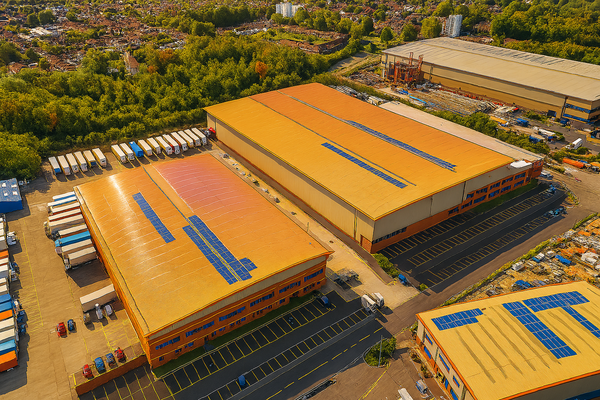
Swedish private equity firm EQT, investing through its EQT Real Estate platform, has finalized the acquisition of a prime UK logistics portfolio from Tritax Big Box REIT plc for a total consideration of £200 million. The transaction has successfully completed, marking a notable deployment of capital into the UK’s industrial sector by the Nordic investment manager.
Asset Overview and Rental Income
The acquired portfolio comprises six high-quality logistics assets that collectively generate a contracted annual rent of £12 million. The properties are strategically positioned across key distribution hubs in the UK's "Golden Triangle" and core regional markets, ensuring strong supply-chain connectivity.
The portfolio includes assets located in:
- Leamington Spa
- Peterborough
- Didcot
- Kettering
Portfolio Background and Context
The six assets were originally part of the UK Commercial Property REIT (UKCM) portfolio. Tritax Big Box acquired these properties in May 2024 as part of its £939 million all-share takeover of UKCM, a transaction that significantly expanded Tritax's footprint in the UK logistics arena.
Following that merger, Tritax identified certain non-core or stabilized assets for strategic disposal to align with its long-term portfolio optimization and capital recycling strategy. For EQT, the acquisition represents a strategic entry point to capture stable, inflation-linked income from well-located UK industrial infrastructure with potential for asset management upside.